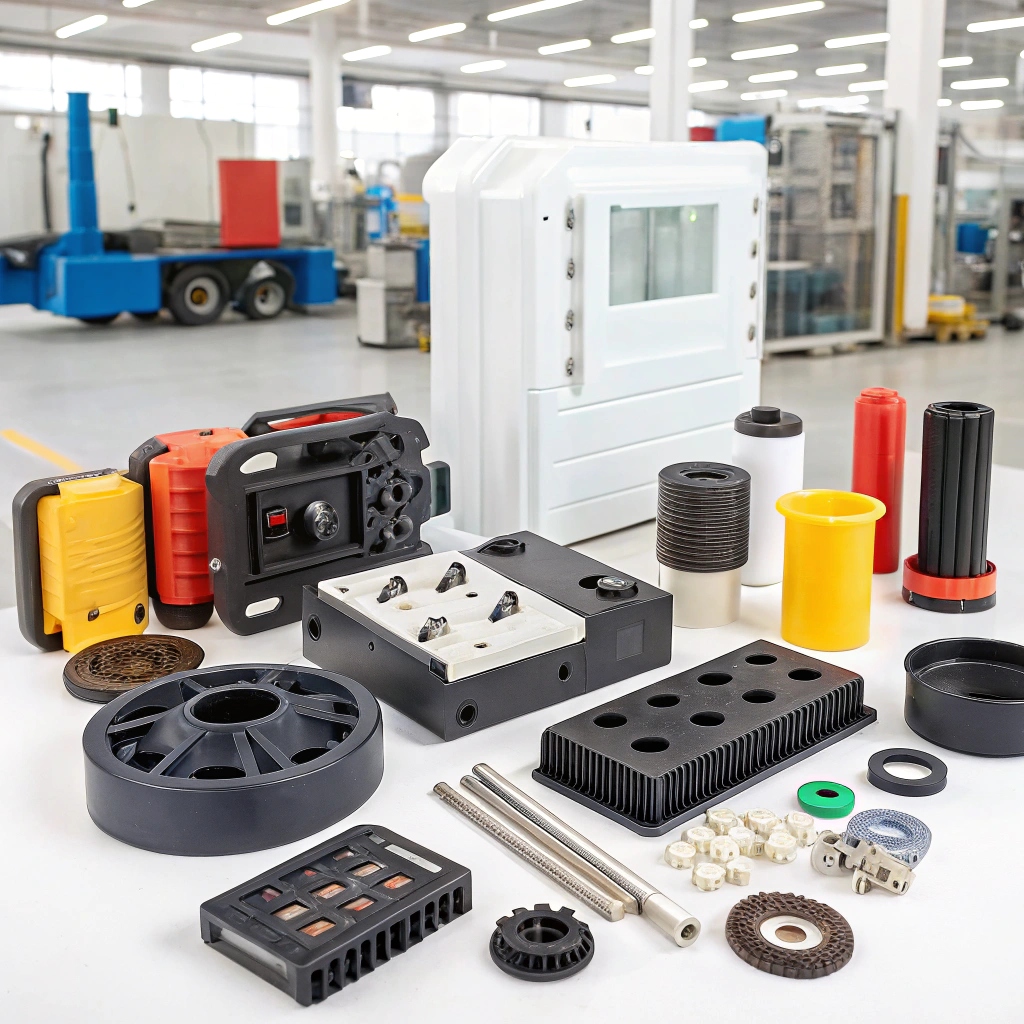
Struggling with inconsistent product quality and high manufacturing costs? Poor production methods risk wasted materials, time, and lost market share. Plastic injection molding offers precision, efficiency, and scalable solutions for diverse industries.
Plastic injection molding is used to create consistent, durable, and complex plastic parts in large or small quantities. Industries including automotive, medical, packaging, and consumer goods rely on this process for cost-effective, accurate, and versatile product manufacturing.
Keep reading to discover where and why industries trust plastic injection molding.
Automotive Industry Applications
The automotive sector heavily depends on plastic injection molding to manufacture lightweight, durable, and complex parts. Components such as dashboards, bumpers, interior panels, and under-the-hood elements are commonly produced using this technique.
Plastic reduces vehicle weight compared to metal, improving fuel efficiency and lowering emissions. Additionally, injection molding ensures high precision, vital for safety-critical applications like airbag housings and lighting components. By using advanced resins, manufacturers achieve heat resistance, flexibility, and superior strength.
The scalability of injection molding also enables mass production while maintaining strict quality standards, making it indispensable for global automotive supply chains.
Medical and Healthcare Uses
In healthcare, precision and hygiene are non-negotiable. Plastic injection molding produces essential items like syringes, IV connectors, surgical instruments, and implantable components.
The process supports the use of medical-grade plastics such as polycarbonate, polypropylene, and polyethylene, which are biocompatible and sterilizable. Cleanroom manufacturing ensures contamination-free output.
Injection molding is especially valuable for single-use medical products that require consistent dimensions and flawless finishes. With rising demand for personalized medical devices, custom molds allow manufacturers to deliver tailored solutions efficiently.
The combination of accuracy, repeatability, and regulatory compliance positions injection molding as a cornerstone of modern medical manufacturing.
Packaging Solutions
Packaging is another sector transformed by injection molding. From bottle caps and food containers to complex closures and protective casings, the method guarantees uniformity and cost efficiency.
High-volume production runs enable companies to meet consumer demands while minimizing per-unit costs. Injection molding also accommodates specialized resins for food safety, recyclability, and extended shelf life.
Lightweight yet durable packaging contributes to sustainability goals by reducing material usage and transport emissions. In industries such as beverages and pharmaceuticals, tamper-evident and child-resistant designs are achieved through precisely engineered molds.
The versatility of injection molding ensures packaging remains both practical and innovative.
Consumer Goods and Electronics
Everyday consumer products and electronics rely on injection molding for their practicality and affordability. Household items like containers, kitchen utensils, toys, and storage systems are produced with speed and precision.
Electronics manufacturers use the process to create housings, connectors, switches, and protective casings. The ability to mold intricate designs with fine details allows for ergonomic and aesthetic product development.
In addition, injection molding supports the integration of advanced materials such as flame-retardant plastics and high-impact polymers, enhancing product durability and safety.
For brands, this method ensures consistent quality that builds consumer trust while keeping production scalable.
Industrial and Specialty Applications
Beyond mainstream industries, injection molding also serves specialized fields such as aerospace, defense, agriculture, and construction.
-
Aerospace: Focuses on lightweight, high-strength components for extreme conditions.
-
Defense: Uses molding for rugged housings, clips, and stress-resistant parts.
-
Agriculture: Relies on UV- and chemical-resistant molded components.
-
Construction: Employs plastic fasteners, fittings, and insulation products.
The adaptability of injection molding makes it a go-to technology for producing parts that meet strict performance requirements across diverse environments.
Conclusion
Plastic injection molding drives efficiency, innovation, and scalability across industries.