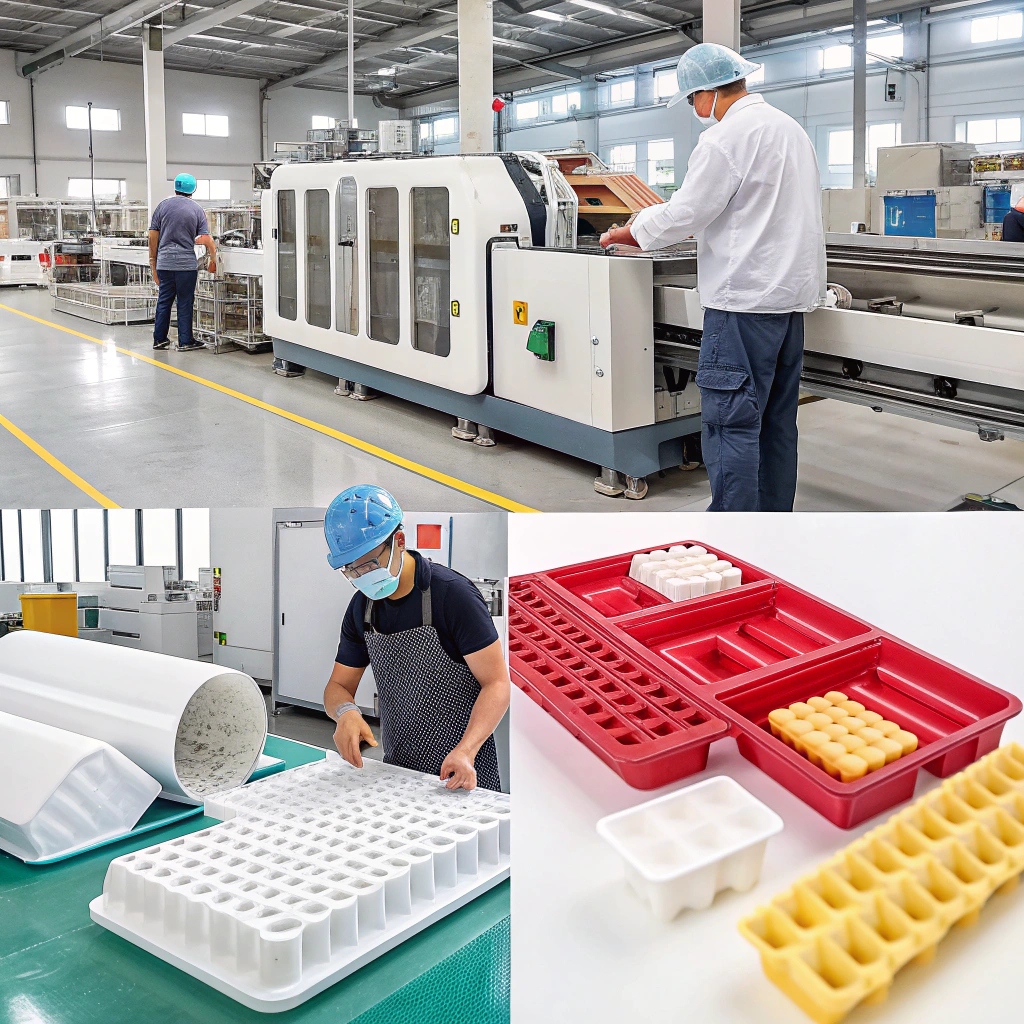
Many businesses struggle with unreliable plastic parts that crack or deform easily, leading to production delays and high replacement costs. Understanding the plastic manufacturing process ensures product durability, precision, and cost-efficiency.
The process of manufacturing a plastic product involves multiple stages, including design, material selection, mold creation, and production through techniques such as injection molding, extrusion, blow molding, or thermoforming. After shaping, the products undergo finishing, quality testing, and packaging to meet functional and aesthetic standards before distribution.
To truly master the plastic manufacturing process, you must understand how each step ensures consistent quality and performance.
1. Product Design and Development
The manufacturing of any plastic product starts with design. Engineers use CAD (Computer-Aided Design) software to create detailed models that define dimensions, wall thickness, tolerances, and structural integrity. The design phase also determines which manufacturing method—such as injection or extrusion—best suits the product’s purpose.
Prototypes are often created using 3D printing or CNC machining to test performance before mass production begins. A successful design ensures manufacturability, cost efficiency, and alignment with the end-use application. Collaboration between designers and engineers at this stage prevents expensive revisions later in the process.
2. Material Selection
Choosing the right plastic material is crucial for performance, cost, and durability. Common materials include:
-
Polyethylene (PE): Flexible and lightweight, ideal for packaging.
-
Polypropylene (PP): Chemical-resistant, used in containers and caps.
-
Acrylonitrile Butadiene Styrene (ABS): Tough and impact-resistant, suitable for electronics and automotive components.
-
Polyvinyl Chloride (PVC): Rigid or flexible, used for pipes and profiles.
Material selection depends on factors like strength, transparency, thermal resistance, and recyclability. Manufacturers often consult polymer data sheets and test samples under real-world conditions before making a final choice.
3. Mold Design and Fabrication
Once the product design and materials are finalized, a precision mold is fabricated. The mold defines the final shape and surface texture of the plastic product. Molds are usually made from hardened steel or aluminum, depending on production volume and budget.
CNC machining and EDM (Electrical Discharge Machining) are used to carve cavities into the mold base. Mold engineers must consider cooling channels, ejection systems, and parting lines. A well-designed mold ensures efficient production and reduces material waste.
4. Plastic Forming Methods
Injection Molding
Molten plastic is injected into a closed mold under high pressure. This method is ideal for producing complex shapes with high precision, such as toys, containers, and auto parts.
Extrusion
Plastic pellets are melted and forced through a die to produce continuous profiles like pipes, tubes, or sheets. It’s excellent for high-volume manufacturing.
Blow Molding
Used for hollow objects like bottles and tanks, blow molding inflates heated plastic into a mold cavity, ensuring lightweight yet strong containers.
Thermoforming
Plastic sheets are heated until pliable, then shaped over molds using vacuum or pressure. Commonly used for packaging trays, panels, and clamshell containers.
Each method has its own advantages depending on the product’s complexity, material type, and production volume.
5. Finishing and Quality Control
After forming, products undergo secondary processes such as trimming, drilling, polishing, printing, or painting to improve appearance and functionality.
Quality control teams test for dimensional accuracy, tensile strength, color consistency, and surface defects. Advanced inspection tools like CMM (Coordinate Measuring Machines) and optical scanners ensure every product meets specifications and customer expectations.
6. Assembly, Packaging, and Distribution
Some products require assembly with metal inserts, screws, or adhesives. After assembly, products are cleaned, labeled, and packaged to prevent damage during shipping.
Packaging may include plastic films, cartons, or eco-friendly materials based on market demands. Efficient logistics and supply chain management ensure fast and reliable delivery.
7. Recycling and Sustainability
Sustainability is increasingly important in plastic manufacturing. Many producers adopt closed-loop systems and recycling programs to minimize waste.
Processes like regrinding and reusing scrap plastic lower environmental impact and production costs. Additionally, bioplastics and biodegradable materials are gaining popularity in packaging and automotive applications to meet global eco-standards.
Summary
Understanding each stage of plastic manufacturing guarantees quality, cost-efficiency, and environmental responsibility.